Tuesday, 3 August 2010

Hill running and my new TRX

Hello to all of you training for life out there. This month I have a new toy the TRX which is fantastic for building in strength but with fun. Pat one of my clients (who I am sure wouldn’t mind me saying) is the fine age of 82yrs had her first try with the TRX last week and loved it. Another client whose identity will remain a secret said it was one of the hardest workouts they had ever had but loved it. So there you have it whether old or young in years the TRX can adapt to whatever your needs.


Another advantage of the TRX is that it is so light I can carry it and then use it for the odd boot camp run and workout as I can strap it to a tree or fixed post, workouts just got more creative

As functional piece of equipment I have a slight unease about it but you can take away some of the support when the move becomes too easy, by not using total upper support, but it is fun and brings smiles on my clients faces so as a tool used every now and then its fine. Have a look at the clip above
 So I am back to my hill running be it slow and I have just invested some Inov8 running shoes. They are very light and give a feeling of running barefoot which as you know I love. Great grip on wet grass and with enough support on tricky rocky surfaces, so again check out the inov8 web site. Joe Browns in Llanberis is the nearest stockist. The clip below is my video of the run enjoy it as the sun came out every now and then. Keep moving you know it makes sense.


The start from Llanberis towards Nant Peris


up the Zig Zags


Coming down the hill too the other lake heading back to Llanberis


Back in Llanberis in time for a cup of coffee, whoopie.!!!!!

Wednesday, 21 July 2010

Functional Movement Class for Injury Prevention and Rehab


This clip is from the English Osteopaths site. It shows clearly all the movement patterns and with good instruction, for all of you that want to understand more about functional training.
I teach functional training on a Friday morning at Maes Glas University sports hall Bangor at 1pm. Open to all, so if you want a taste come along.

Sunday, 13 June 2010

The hips

Welcome to the Junes blog, last month I had the knee fetish and said I would talk about helping knee pain and so now we work our way up to the hips.As you may of gathered the knee pain is more than likely coming from the hip, or foot but don't forget it may not be shoulders have had effects on knees. In my day to day practice I get all sorts of clients come to me with their training needs, some of them have been referred to me because of pain usually in the lower back but it can cover all areas including knees.
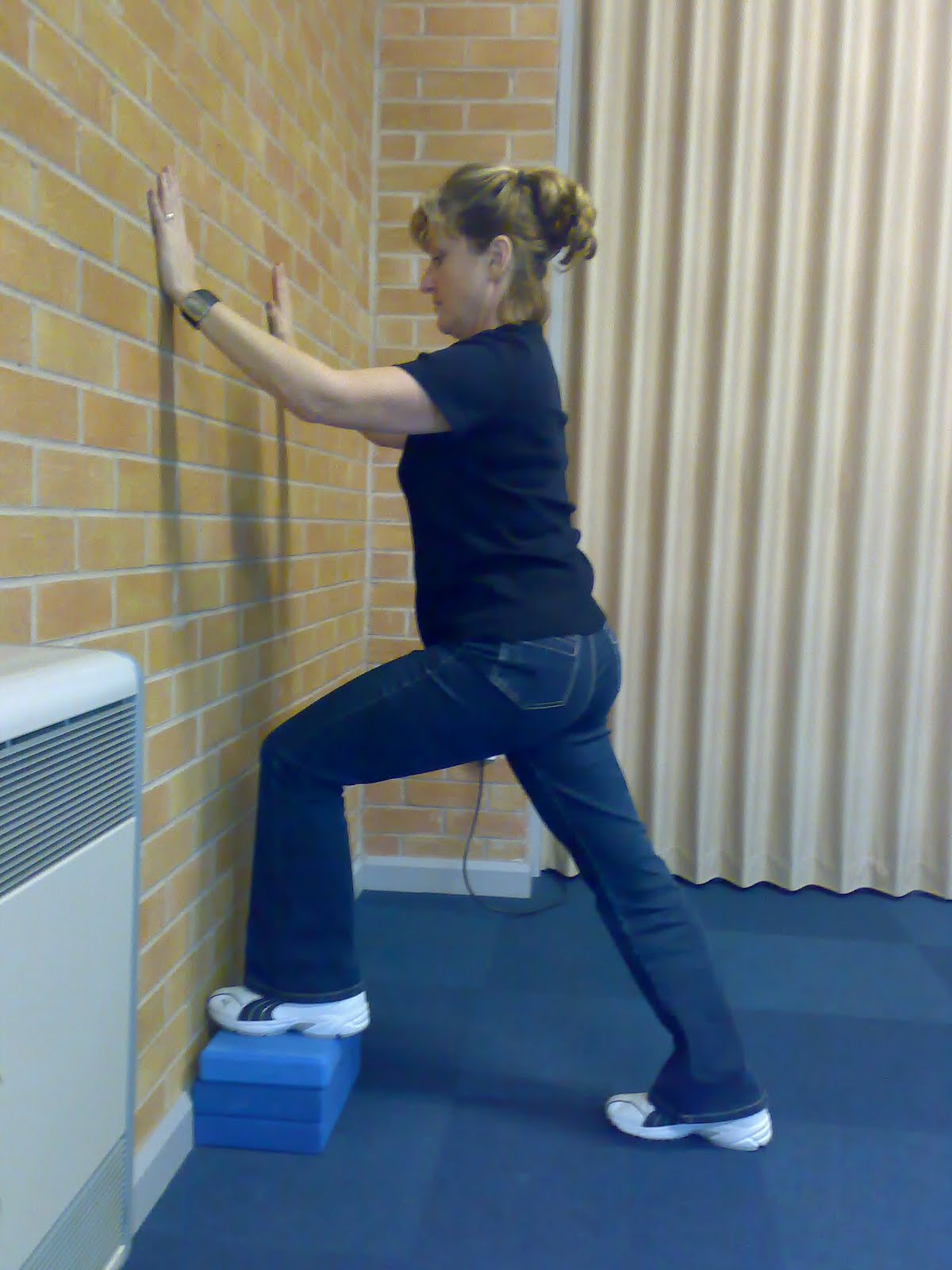
I will only work with people once they have had the all clear from the hospital or GP and some after having MRI scans. Sometimes I get the request to have a look at someone with regards to training them for something specific. Before I start any training we work through some basic movement patterns and one of them is the tri plane hip mobility. Have a go and see if your hips are moving. Gary Gray said once in a session that I attended in London,’ if the hips aren’t moving the body’s not grooving’, how true!

Hip mobilises
These movement patterns allow the hip area to loosen up ready for the rest of the training programme
Try and keep relaxed in the shoulders and upper body area when performing them.
Sometimes it is better to perform with no shoes on but if it feels uncomfortable keep your foot wear on.
 Try and perform 30sec on each move
 If when performing the moves, it feels not right slow the move down or come back to it later. Work to your transformational
zone = TZ.


Start position
 Left foot is placed high on a box or
chair
 Hands shoulder height on the wall
 Right leg is straight heel of foot
pushed into the floor


Side too side movement = S2S
 Rock / move hips side to side


Twist movement = TM
 Twist hips towards the wall and then away
 Try and keep heel of back leg on the floor


Forward and backward movement
= F&B
 Tilt/rock the hips forward then back
 Keep the heel of the back foot on the
floor


Now move too the side then repeat the mobilises
Keep same left foot on the box/chair
and slightly bent right leg straight
 Repeat the same movement patterns
only in a different sequence
1st F&B 2nd TW 3rd S2S


 Keep left foot on the box/chair slightly bent. The right leg which is
now the leg in the front slightly bent
 Repeat the same movement patterns only in a different sequence
1st S2S 2nd TW 3rd F&B
 Now repeat with the right leg on the box and the left leg on the floor

Monday, 24 May 2010

Causes of Knee Soreness


A lot of my clients come to realise as their sessions mount up from weeks into years that the training I offer is not the traditional gym based training. Yes the results or outcomes they want are tide into their programme but as a functional trainer I have to ask myself are they moving and performing those movements well. As we move up the chain we go to an area which I feel gets a lot of blame I talk of the knees. Time after time I hear these chosen words, ‘I can’t /run/ go up or down mountains/ walk far/ squat/ lunge, because of my knees’. Now I have to say if you have had an injury to the knee or knees then ok but still I say things can be improved, but if not why are you getting knee pain? The knee like the rest of our body reacts to the ground and goes through that tri plane loading. As I wrote about the foot in my earlier blog hitting the ground, that reaction of loading in all three planes works its way up the body. The knee reacts the same, dissipating some of that force, and in doing so it will move forward, frontal plane (to the side) and even rotate, Have a look at Gary Gray talk about the this subject to David Tiberio on there U Tube site. In my next blog I will give some strategies / training to help the knee and give some true stories of my clients and there successful training for there knee pain. Keep moving you know it makes sense

Sunday, 9 May 2010

Barefoot running at the 5k Race for Life Caernarfon

This blog is my account of running in the Caernarfon 5k. The ground under foot was part tarmac and part grass so had to move pretty quickly on uneven surfaces. Here is the start of the race
I started slow at the back to be fair, but that gave me the chance to chat to a few friends on the way along the Strait. I really enjoyed my run the weather was good and in my barefoots I felt strong in my running.

For those people starting out walking or running in barefoots trainers train smart there a alot of U Tube clips to get you started have a look. I would also say I did my tri plane warm up and 3D stretches before I started so that added to my free running movement. I have noticed when running I have a lot more thoracic extension which gives me more abdominal loading these days. I still need to work on my right hip extension but that I think is product of my left shoulder injury which is in recovery from my snowboarding crash. In my next blog I shall move up the chain from the foot to the hip and write about that chain reaction. Enjoy your movement

Wednesday, 5 May 2010

This weekend the 5k race for life, and I am wearing my Evo's for the first time in a race.This is just a clip of what they look like, short and sweet.

Monday, 3 May 2010

Biomechanics of the foot

Biomechanics of the Foot

Hello everyone in lets train functionally land. Here above is a video showing how wonderful the foot is and the base for all movement
The foot as I mentioned in another blog has 33 joints, 26 bones, 24 muscles 2 sesamoid bones
All movements of the foot and lower extremity evolve within a three dimensional environment. To fully appreciate the actions of the foot, ankle, leg and hip, our movement must be understood if you want too train functionally
Universal to all motion is:
All movements are tri-plane.

All integrated motion involves multi-joint actions.
Effective actions must first undergo deceleration (force reduction), stabilization and then acceleration (force production).
The body reacts to ground reaction forces.
We can break the foot into 3 regions – rear, mid and fore foot
Rear foot – looking at the foot from side think of the big heel bone (calcaneus) as a bicycle the talus the rider who sits on top of the bicycle
Mid foot – reacts to what goes on with rear foot
Fore foot – has it’s own action which reacts to what happens with rear and mid foot
So it makes sense that your foot needs to know what is going on if you cushion the sole with a cushion then you get the cushion effect which if you have ever stood on a cushion can be a bit unstable. If you are running and hit the ground with a rubber bouncy effect lots of the wrong messages get sent up the chain your body if you must wear trainers go for the cheap ones and if you are starting to wear bare foots here is a bit of advice start wearing them for an hour at a time and build that time up so your foot muscles can adapt to the change and when you start running in them of bare foot apply the same method as this will lead to less fatigue in the foot. enjoy!